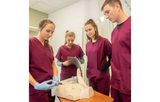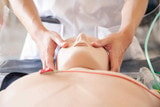

Why Use Models & Simulations in Veterinary Education?
Dec 18th 2025
In today’s fast-evolving world of veterinary medicine, simply reading about anatomy or observing procedures isn’t enough. Veterinary students and educators increasingly seek immersive, hands-on learning approaches. However, training on live animals can be limited, costly, or ethically constrained. Immersive resources such as anatomical models and simulation tools provide a practical bridge between theory and application.
Learn why models and simulations are essential to veterinary education, how they’re used in classrooms and labs, and what benefits they offer for educators and students alike.
What Are Veterinary Anatomical & Simulation Models?
Veterinary anatomical models are three-dimensional representations of animals’ skeletal, muscular, or organ systems used to teach physiology and anatomy with spatial understanding. These can be used as simulation tools to practice procedures in realistic and repeatable settings. Basic and “smart” manikins, part-task trainers, and advanced veterinary surgery simulators are all excellent resources for developing practical veterinary skills in a safe, structured environment.
Veterinary Model & Simulation Terminology
- Simulators in Veterinary Education: All interactive, visual tools – including physical models and digital platforms – that allow students to rehearse procedures or clinical scenarios
- Veterinary Simulation Models / Anatomical Models: Realistic 3D replicas of animal anatomy, which may be static or have dynamic features that react to input
- Veterinary Surgery Simulators: Static or dynamic models that mimic specific surgical conditions for skill development
- Digital Veterinary Teaching Aids: Software or virtual reality (VR) resources that use 3D imagery and documentation to complement physical models
The Importance of Hands-on Tools in Veterinary Education
A Bridge Between Theory & Practice
Many veterinary tasks require spatial awareness and dexterity that cannot be learned from 2D diagrams. Veterinary anatomical models give students a sense of structure and proportion that improves their comprehension of complex systems and prepares them for hands-on care.
Ethics and Access
High-fidelity simulation tools reduce dependence on live animals and cadavers. This aligns with animal welfare priorities, lowers material costs, and reduces access challenges for educators. Simulation tools also allow learners to repeat procedures safely – an advantage in programs with limited access to live specimens.
Competence, Confidence & Readiness
Simulation-based learning tools boost both knowledge retention and practical skills. Students who train with veterinary simulation models often demonstrate greater accuracy, confidence, and readiness when transitioning to live-animal care.
Other Key Benefits of Veterinary Models & Simulations
- Safe, Respectable Practice: Enables trial, error, and repetition without harm to live specimens
- Reduced Anxiety: Early exposure to real-life procedures and scenarios builds confidence before clinical rotations.
- Ethical & Resource-Efficient: Limits live-animal use while supporting effective, sustainable learning
- Advanced Visualization: 3D models improve understanding of spatial relationships.
- Curriculum Alignment: Simulations can be mapped to specific competencies for measurable learning outcomes.
How to Use Veterinary Models
Best Practices for Educators
- Integrate Early: Introduce models and simulations before live-patient work to build foundational skills.
- Align Goals & Tools: Use simulators intentionally to achieve clear learning outcomes.
- Select Species-Specific Tools: Match models to target anatomy (canine, bovine, equine, etc.)
- Merge Physical & Digital Aids: Combine tangible models with digital veterinary teaching aids like virtual reality or 3D scans to accommodate different learning styles.
- Encourage Feedback: Allow repeated practice and structured reflection
- Balance Cost & Durability: Choose long-lasting veterinary teaching models to serve multiple cohorts.
Teaching programs should also balance the desired level of realism with ease of integration, cost, and feedback potential. By carefully coordinating these factors, veterinary educators can create sustainable, high-impact simulation programs that prepare students for every facet of veterinary care.
Foundational Teaching Use Cases
In anatomy labs, physical models and 3D-printed replicas help students visualize and compare structures across species when cadaveric specimens are unavailable. They reinforce textbook learning and provide reusable, hygienic alternatives for repeated study.
Surgery & Clinical-Skills Training Use Cases
Simulators in veterinary education enable safe, hands-on practice of procedures such as suturing, catheter placement, and reproductive exams. Some veterinary surgery simulators replicate realistic tissue feedback and surgical scenarios, helping students master crucial techniques before performing on live patients. However, even more affordable static models can support surgical lesson plans when paired with the right tools and moulage.
Immersive Simulation Use Cases
More advanced simulations in veterinary medicine use immersive setups – from emergency response drills to anesthesia crisis scenarios – to develop teamwork, strategic decision-making, and effective communication skills. These exercises include briefs with imagined details that make the scene more realistic and contextual. For example, veterinary students are informed about the name of the “patient,” what the pet owner was doing with the patient earlier that day, and how stressed the pet owner is, among other details. This encourages learners to think clinically (and critically) under pressure while building the soft skills imperative to practice readiness.
Choosing the Proper Tools for Your Program
Selecting the right teaching aids starts with setting clear goals that align with learning objectives:
- Use static veterinary anatomical models for structure and theory
- Choose dynamic simulation models or surgery simulators for procedural training
- Consider digital veterinary teaching aids to supplement visual learning
Whether in anatomy labs or surgery suites, these tools build better vets, one lesson at a time. Explore Anatomy Warehouse’s range of veterinary anatomical models and simulation tools to enrich your curriculum and elevate learning experiences.
Share: