What Equipment Does a Phlebotomy Training Program Need?
Nov 13th 2026
Phlebotomy equipment is where training programs turn knowledge into skill, because students learn this procedure with their hands. They can study the steps, memorize the order of draw, and pass a written exam. None of that teaches them what a good vein feels like under a gloved fingertip or the slight give when a needle enters it. That comes from practice – a lot of it, on equipment that behaves like a real arm.
What a program needs depends on where students are in that process, and the same progression holds for professionals refreshing their technique. This guide covers the equipment for each stage of skill-building, along with the consumables and replacement parts that keep practice going semester after semester.
Start With the Veins: Arm Anatomy by Touch
Before students pick up a needle, they need to know where to look and, more importantly, where to feel. Most routine draws happen in the antecubital fossa, the shallow hollow inside the elbow. Three veins in the arm do most of the work in phlebotomy:
- Median cubital vein: This is the first choice for most draws. It's usually large, close to the surface, and well anchored, so it's less likely to roll.
- Cephalic vein: It runs along the thumb side of the arm and is the second choice. It's often easier to feel in patients with more tissue around the elbow.
- Basilic vein: It sits on the pinky side and is the last resort because it lies close to the brachial artery and the median nerve.
When the arm isn't an option, the dorsal veins of the hand are the usual backup.
A vascular system anatomy chart shows students where the arm veins used in phlebotomy run. Vascular models show how veins, arteries, and surrounding structures relate in three dimensions. Both belong in the classroom.
In the clinic, though, veins are often invisible. Darker skin, extra subcutaneous tissue, and dehydration can all hide them. Phlebotomists find them by palpation: a vein feels bouncy and resilient, a tendon feels hard, and an artery pulses. Students only learn that difference with their fingertips. That's why practice veins they can palpate at a realistic depth should follow closely behind the charts and models.
First Sticks: Arms, Hands, and Pads
Once students can find a vein, they need somewhere to put a needle in it, over and over. Most venipuncture practice kits are built around one of three formats, and many programs use more than one.
Full Arms
A full arm lets students run the whole procedure the way they will on a patient. They position the arm, tie the tourniquet, palpate, anchor the vein, draw, and bandage. A phlebotomy practice arm is the centerpiece of most skills labs. A complete phlebotomy training kit pairs the arm with the supplies to start practicing right away.
Hands
Hand trainers focus on the dorsal hand veins, which are smaller, shallower, and less forgiving than the veins at the elbow. An advanced IV hand or a simpler hand task trainer gives students dedicated time on this harder site.
Pads
Venipuncture pads trade the full arm for portability and price. A program can often issue one per student, which means more sticks per student and less time waiting for a turn at the arm. Some pads include four veins, so students can vary their approach without switching trainers.
What to Look For
A few features separate useful practice from going through the motions, regardless of format:
- Self-sealing skin holds up to repeated sticks without leaking.
- Simulated blood and flashback let students confirm they're in the vein.
- Realistic vein depth and movement give students practice with veins that roll if they don't anchor them.
- Room for a tourniquet makes tourniquet placement part of every repetition.
- Latex-free materials protect students and instructors with sensitivities.
Add IV Insertion With the Same Equipment
Many phlebotomy programs share a skills lab with nursing, EMT, or medical assistant programs that also teach IV starts. The equipment overlaps heavily. The same IV practice arm that trains blood draws can also train catheter insertion with a few additions: IV catheters, an infusion set, and fluid to run through it.
An IV practice kit built for both skills saves a program from buying two sets of trainers. Look for one that supports venipuncture at the cephalic, basilic, and dorsal hand sites, along with catheter advancement and IV medication administration. A registered nurse walks through one kit's setup in this hands-on video.
A supplemental IV kit keeps the IV side of the setup stocked, and simulated IV bags add realism without actual medication.
Injection training (intramuscular and subcutaneous shots) is a different skill with different equipment.
Beyond the Basics: Difficulty, Skin Tones, and Hard Sticks
A student who can hit the median cubital on a cooperative trainer is ready for the next step, not for every patient. Patients vary, and the hardest draws are the ones students haven't felt before.
Every program eventually sends students to patients whose veins are hard to find or access, which phlebotomists call "hard sticks." Advanced trainers with deeper or smaller veins let students work up to that difficulty in a controlled setting. A more lifelike IV arm adds another layer by mimicking the look and feel of skin more closely.
Skin tone matters for a similar reason. Veins are harder to see on darker skin, so students who have only practiced on light-skinned trainers may lean on sight instead of touch. Training on a range of skin tones pushes them to palpate every time. One four-vein venipuncture pad makes the point well: it comes in light and dark versions with the same vein layout. Only the visual cue changes. IV trainers in darker skin tones also come in multi-packs for larger classes.
Variety is what builds adaptable skills. Repetition turns technique into habit, and students who only practice on one trainer build habits for one arm. Browse the full range of venipuncture task trainers to build a lineup that challenges students at every level.
Programs that teach ultrasound-guided vascular access can go a step further with a vascular access ultrasound phantom, which adds deep veins that can't be palpated at all.
Supplies, Consumables, and the Real Cost of a Practice Arm
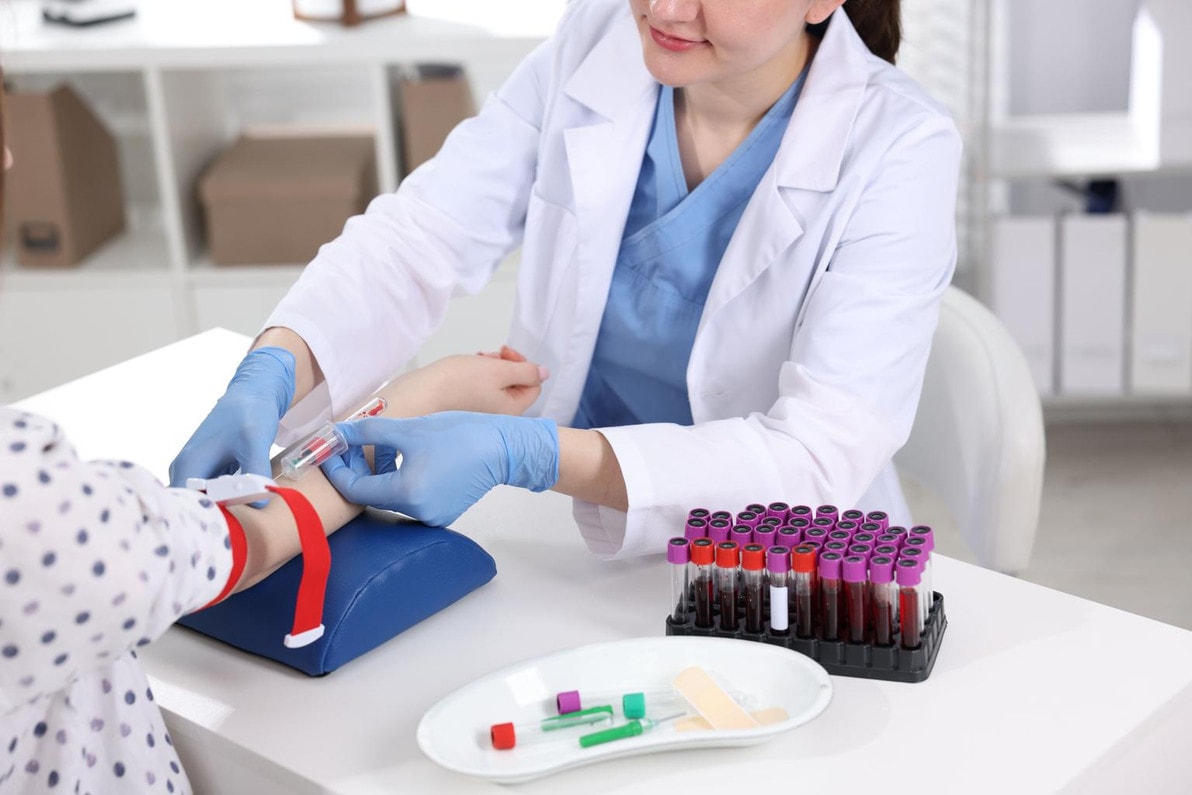
The trainer is only half of a blood draw practice kit. Students should practice with the same supplies they'll use on patients, so every step becomes habit: gloves, tourniquet, site prep, draw, tube handling, and sharps disposal.
What Belongs on a Phlebotomy Equipment List
A complete practice station includes:
- A practice arm, hand, or venipuncture pad
- Tourniquets
- Multi-sample needles, tube holders, and butterfly sets
- Evacuated collection tubes
- Simulated blood
- Alcohol prep pads, gauze, and bandages
- Gloves
- A sharps container
- Replacement veins and skins
When those supplies run low, a supplemental phlebotomy kit restocks them in one order.
Budget for Replacement Parts
Every stick leaves a mark, and even durable, self-sealing veins and skins wear out eventually. The price of the trainer is the start of the cost, not the whole of it. When comparing equipment, look at what replacement parts are available and what they cost. Then budget by cohort: how many students, how many sticks each, and how many semesters the trainer needs to last.
Replacement veins for your vein trainer typically cost less than replacing the whole trainer and keep it in service longer.
Programs using a combination venipuncture and IV kit can find fixes for common IV arm issues in these troubleshooting guides.
Build Confidence Before the First Patient
Confident phlebotomists have felt a lot of veins before their first patient. They've found the median cubital by touch, worked through veins that roll and hide, and repeated each step until it's second nature. The right equipment at each stage makes that possible.
Anatomy Warehouse carries hands-on training tools for every stage of phlebotomy practice. Browse phlebotomy practice kit options today. Reach out if you need support choosing equipment or a custom quote for a full skills lab.
Frequently Asked Questions
Do phlebotomy students practice on each other?
Many programs include supervised live draws, usually after students show they can perform the procedure safely on a trainer. Certification typically requires a documented number of successful live draws. Training arms don't replace that step. They make sure students arrive at it prepared.
What is a hard stick in phlebotomy?
A hard stick is a patient whose veins are difficult to access because they're small, deep, rolling, fragile, or scarred. Dehydration, age, body size, and some medical treatments can all contribute. Trainers with advanced or harder-to-palpate veins help students build the skills to handle these draws.
How can students practice phlebotomy at home?
Portable venipuncture pads let students keep practicing between lab sessions. Short, frequent sessions focused on finding and anchoring veins build the muscle memory that scheduled lab time can't cover alone. Programs should set clear rules for taking needles home, including how students dispose of used sharps.
Share: